
Cart
Your shopping cart doesn't have any products yet!
Moissanite pendants are popular for their brilliant sparkle, attractive appearance, and impressive durability. Whether worn as an everyday necklace or reserved for special occasions, a moissanite pendant can maintain its beauty for years with proper care. However, people who wear jewelry frequently may wonder whether repeated knocks against clothing, furniture, bags, or other hard surfaces can cause visible chips in the gemstone.
The short answer is yes, frequent or forceful impacts can potentially chip a moissanite pendant, but ordinary light contact is unlikely to cause damage under normal wearing conditions. Moissanite is a durable gemstone, yet it is not completely resistant to physical damage. The likelihood of chipping depends on the force and angle of an impact, the shape of the gemstone, the quality of its setting, and how the pendant is worn.
Understanding these factors can help you protect your jewelry and make informed decisions when choosing a moissanite pendant for daily wear.
Moissanite is a lab-created gemstone known for its exceptional brilliance and resistance to scratching. It ranks approximately 9.25 on the Mohs hardness scale, making it harder than most common gemstones and second only to diamond among widely used jewelry gemstones.
This high hardness makes moissanite an excellent choice for necklaces and pendants that are worn regularly. Everyday contact with fabric, skin, and many household materials generally will not scratch the gemstone's surface.
However, hardness and toughness are not the same thing.
Hardness describes a material's resistance to scratching.
Toughness describes its ability to withstand impacts without cracking, chipping, or breaking.
Although moissanite is hard and reasonably tough, a sharp impact against a hard object can still damage its edges or surface. Therefore, moissanite pendant durability should be judged by more than its hardness rating alone.
Repeated impacts may increase the chance of damage, especially when the pendant regularly strikes hard surfaces. Nevertheless, the number of knocks is not the only factor that matters. The force, direction, and location of each impact can be more important than how often contact occurs.
A moissanite pendant may gently brush against a shirt, rest against the chest, or move slightly while walking. These everyday movements are generally unlikely to chip a well-cut gemstone.
Even occasional light contact with common objects does not automatically mean the pendant will become damaged. Moissanite is designed to withstand normal jewelry wear, and a securely mounted stone can remain attractive for a long time.
A harder knock against a countertop, doorframe, metal fixture, or another rigid object presents a greater risk. The gemstone may strike the surface at an unfavorable angle, concentrating the force on a small area.
The edges and pointed corners of a faceted moissanite stone can be particularly vulnerable to impact damage. For example, a pendant featuring a pointed pear-shaped or marquise-cut stone may require more protection than a design with a rounded outline.
A single strong impact can sometimes cause a chip, while numerous gentle contacts may leave the gemstone completely unaffected.
Frequent knocks do not necessarily cause damage to accumulate in a predictable way. A moissanite pendant can experience years of ordinary movement without visible problems. However, repeated hard impacts create more opportunities for an unfavorable collision to occur.
If a pendant is worn during activities involving vigorous movement, contact with equipment, or frequent bending over hard surfaces, taking it off beforehand is a sensible precaution.
Not every part of a moissanite gemstone is equally exposed to impact. Understanding the shape of the stone and the design of the pendant can help you identify potential weak points.
Faceted gemstones have multiple surfaces that meet along edges and corners. These areas may be more susceptible to localized impact damage than broad, well-supported surfaces.
Square, rectangular, pear, and marquise cuts often have corners or pointed ends that deserve additional attention. A round brilliant moissanite has no sharp external corners, although its exposed girdle and other edges can still be damaged.
The girdle is the perimeter separating the upper and lower portions of a faceted gemstone. Depending on the cut and setting, parts of the girdle may be exposed to direct contact.
If the pendant repeatedly hits hard objects, an exposed area of the girdle may be at risk of chipping. A setting that protects the gemstone's perimeter can help reduce this risk.
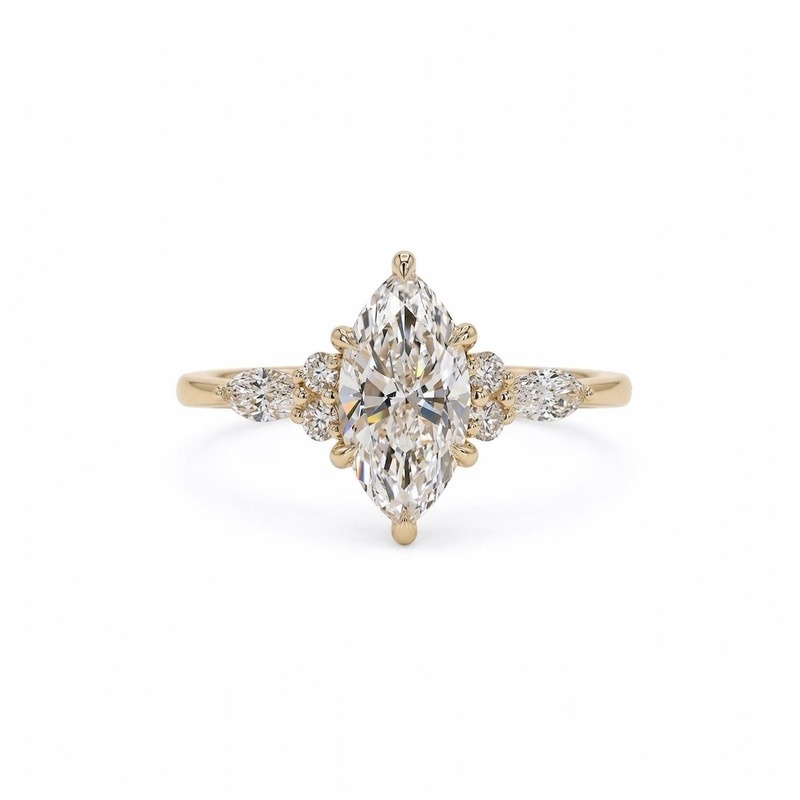
Pear-shaped and marquise-cut moissanite pendants can feature narrow tips that are more exposed than the rounded portions of the stone. If these tips repeatedly strike hard surfaces, they may be more vulnerable to damage.
Protective prongs or a bezel setting can help shield these areas, depending on the specific design.
Yes. The setting plays an important role in how well a moissanite pendant is protected from everyday knocks. Even a durable gemstone can be vulnerable if its edges are exposed or the stone is not held securely.
A bezel setting surrounds the gemstone's perimeter with a rim of metal. This design can provide useful protection for the edges and reduce direct contact with hard objects.
Bezel-set moissanite pendants are often a practical choice for people who prefer a streamlined design and want additional protection around the stone. The exact level of protection depends on how much of the gemstone is covered and how securely the setting is made.
Prong settings use small metal claws to hold the gemstone in place while leaving much of its surface exposed. This design allows light to enter the stone from different directions, creating a bright, sparkling appearance.
However, exposed edges may be more susceptible to direct impacts. The number, placement, and condition of the prongs influence how securely the stone is held.
Regularly checking the prongs is especially important if you wear your pendant every day. Bent, worn, or loose prongs should be inspected by a qualified jeweler.
Halo pendants surround a central moissanite with smaller accent stones. Depending on the design, the surrounding metal and stones may offer some protection to portions of the center stone.
However, a halo setting does not automatically prevent chipping. The central gemstone may still have exposed edges, so the overall design and craftsmanship remain important.
In some cases, yes. The appropriate repair depends on the size, depth, and location of the chip.
A minor chip along an edge may be addressed by a professional lapidary or gemstone specialist who can assess whether careful repolishing or recutting is possible. However, reshaping the gemstone may alter its dimensions, proportions, or appearance.
More extensive damage may require replacing the stone. A jeweler can also examine the setting to determine whether loose prongs, bent metal, or another structural issue contributed to the problem.
Avoid attempting to repair a chipped moissanite gemstone at home with abrasive materials, household adhesives, or improvised polishing tools. These methods can cause additional damage or interfere with the setting.
If you suspect that your pendant has chipped, stop wearing it until the gemstone and setting have been inspected. This is particularly important if the stone feels loose or has developed a sharp edge.
Although moissanite is suitable for everyday jewelry, a few simple habits can help preserve its appearance and reduce unnecessary damage.
Take off your necklace before exercising with equipment, playing contact sports, performing manual work, or engaging in activities where the pendant could strike hard surfaces.
For swimming, showering, and other situations in which a necklace could snag or become entangled, removing it can also reduce the risk of damage or loss.
If you expect to wear your pendant frequently, consider a bezel setting or another design that shields vulnerable edges. For pointed gemstone cuts, ask the jeweler how the tip and corners are protected.
A well-designed setting should balance protection, appearance, and the amount of gemstone visible.
Check whether the gemstone moves in its setting, whether any prongs appear bent, and whether the pendant has visible damage. If the stone rattles or seems loose, arrange a professional inspection rather than trying to tighten the setting yourself.
Routine checks are especially useful for necklaces worn daily, as movement and contact can gradually affect the metal components.
When you are not wearing your moissanite pendant, keep it in a soft jewelry pouch or a separate compartment in a jewelry box. This reduces the chance of it knocking against other jewelry or becoming scratched by harder materials.
Keeping necklaces separate also helps prevent chains from tangling and reduces pulling on the pendant.
Dust, body oils, and cosmetic residue can make a moissanite gemstone appear dull even when it has not been damaged. Clean it with mild soap, lukewarm water, and a soft brush when appropriate for the metal and setting.
Avoid harsh chemicals and abrasive cleaning products. If the pendant has a delicate setting, glued components, or other special construction, follow the jeweler's cleaning recommendations.
A small chip can sometimes be difficult to distinguish from the normal edges and facets of a gemstone. Changes in appearance may also result from dirt, residue, or reflections from the surrounding metal.
Look for these possible signs of damage:
A new irregular notch along the gemstone's edge.
A small missing fragment near a corner or pointed tip.
An unusual rough or sharp area that was not present before.
A visible change in the stone's outline when viewed from different angles.
A new area of localized light reflection that appears different from the surrounding facets.
Clean the pendant gently before inspecting it under bright, indirect light. A jeweler's loupe may help reveal small imperfections, but avoid pressing on the stone or using tools that could scratch the metal or loosen the setting.
If you are unsure whether the mark is a chip, have a jeweler examine it. A professional can distinguish impact damage from a natural-looking facet junction, surface residue, or another optical effect.
For many people, yes. Moissanite combines strong scratch resistance, brilliant light performance, and an attractive appearance, making it well suited to necklaces worn regularly.
Compared with softer gemstones, moissanite generally tolerates everyday contact very well. It is also available in many cuts, sizes, and setting styles, allowing buyers to choose between highly exposed designs and more protective settings.
The best option depends on your lifestyle. If you rarely remove your jewelry and tend to wear a necklace during busy activities, a securely mounted stone with protected edges may be a sensible choice. If you prefer a delicate design with exposed facets and pointed corners, taking additional care can help reduce the risk of damage.
Ultimately, moissanite is durable but not indestructible. Choosing a suitable setting and avoiding forceful impacts are more reliable ways to protect it than relying on hardness alone.
Moissanite is highly scratch-resistant and durable, but diamond has greater hardness. Neither gemstone is immune to chipping. The outcome of an impact depends on factors such as the cut, the location of the blow, and the gemstone's support within the setting. It is not accurate to assume that either stone can never chip.
Yes, it is possible if the impact is forceful or strikes a vulnerable edge or corner. A light brush against a table is much less concerning than a direct, hard collision. The pendant's setting and the angle of impact also affect the risk.
Not necessarily. Moissanite is well suited to regular wear, and normal movement is unlikely to cause visible damage. Removing the pendant during high-impact activities and inspecting its setting periodically can help keep it in good condition.
A round brilliant cut has no pointed external corners, which can reduce certain risks associated with pointed shapes. However, the girdle and other edges can still be damaged by a strong impact. The setting and the way the pendant is worn remain important.
A bezel setting can offer additional protection by surrounding the gemstone's perimeter with metal. It may be a practical option for everyday wear, although the amount of protection depends on the design, construction, and coverage of the setting.
Yes, it is best to pause wearing it until a jeweler has assessed the damage. Even a small chip may become more noticeable or expose an edge that is vulnerable to further damage. A professional can determine whether repair or replacement is appropriate.
Frequent knocks can cause visible chips on a moissanite pendant, but damage is not an inevitable result of everyday wear. Moissanite is a hard, durable gemstone that can maintain its brilliance for years when properly cared for. The greatest risks usually come from forceful impacts, exposed edges, pointed gemstone shapes, and settings that do not adequately secure or protect the stone.
If you want a moissanite pendant for daily use, consider a protective setting, inspect the jewelry regularly, and remove it before activities that could cause hard collisions. With thoughtful selection and simple care, you can enjoy the beauty of your moissanite pendant while minimizing the risk of visible chips.